The Ultimate Guide to Sanitary Pressure Relief Valve in the UK
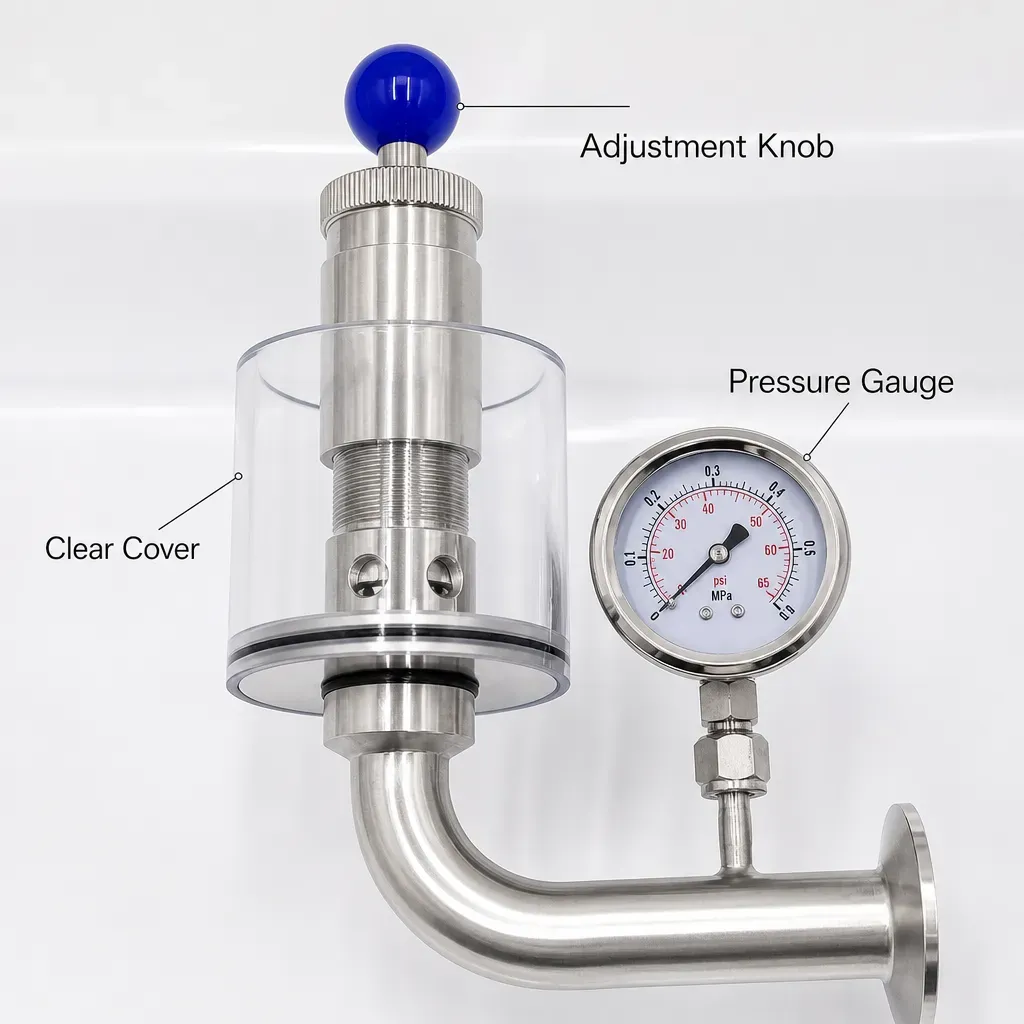
A sanitary pressure relief valve is a hygienic valve that releases excess pressure from clean-process vessels and pipework while maintaining cleanability, product integrity and safer operating conditions. In UK breweries, cider houses, distilleries, kombucha production and other hygienic process environments, it is commonly used to control fermentation pressure, support closed transfer and protect stainless systems fitted with tri-clamp connections.
TL;DR: A sanitary pressure relief valve is used to vent excess presn hygienic processing systems without introducing contamination risks. For UK operators, the right specification usually means stainless steel construction, hygienic seals, tri-clamp compatibility, an appropriate pressure range and suitability for cleaning regimes such as CIP. Based on our testing in closed-transfer and fermentation setups, adjustable sanitary valves are especially useful where repeatable pressure control matters as much as hygiene.
A small pressure error can spoil a batch, slow a transfer, waste CO2 or create an avoidable safety risk. Therefore, when pressure must be managed cleanly and accurately, sanitary design is not optional. GasPressur’s Adjustable Pressure Relief Valve Tri Clamp Spunding Valve is designed around that practical requirement: precise sanitary pressure control for fermentation, transfer and carbonation in modern stainless systems.
Key Takeaways
- A sanitary pressure relief valve is designed to release excess presn hygienic process systems without compromising cleanability or product integrity.
- For UK breweries, beverage producers and clean-process operators, tri-clamp sanitary construction supports easier cleaning, inspection and integration.
- Adjustable sanitary pressure relief valves are especially useful for fermentation pressure management, spunding, closed transfers and controlled carbonation.
- Material choice, seal compatibility, pressure range, connection standard and cleanability should all be checked before purchase.
- Pressure equipment in the UK must be selected and used with proper regard to the Pressure Equipment (Safety) Regulations 2016, the Pressure Systems Safety Regulations 2000 and wider site risk controls.
- GasPressur’s adjustable tri-clamp spunding-style valve aligns with producers who need precise, repeatable sanitary pressure control rather than improvised workarounds.
What is a sanitary pressure relief valve?
A sanitary pressure relief valve is a pressure control device built for hygienic systems where the process fluid, gas path and product-contact surfaces must be easy to clean and resistant to contamination. It opens when system pressure reaches a defined threshold, allowing excess pressure to vent in a controlled way. Once the pressure drops back within the intended range, the valve closes again.
The word sanitary matters. In practical terms, it usually means smooth stainless steel construction, hygienic seals, minimal crevices and connection standards such as tri-clamp fittings that support disassembly, inspection and cleaning. In sectors such as brewing, food and drink processing, pharmaceuticals and certain healthcare-adjacent production environments, those design details are critical.
A standard industrial relief valve may protect pressure, but it is not automatically suitable for product-contact or clean-process use. By comparison, a sanitary pressure relief valve is specified for environments where hygiene, washdown capability and material compatibility are part of the buying decision.
How does a sanitary pressure relief valve work?
Most sanitary pressure relief valves rely on a spring-loaded mechanism or a similar adjustable internal arrangement. The operator sets a target release pressure. As vessel or line pressure rises, the force acting on the internal seat increases. When the process pressure exceeds the set point, the valve lifts and vents. Then, when the pressure falls, the spring force reseats the valve.
In fermentation applications, that venting action may be used not only as an overpressure safeguard, but also as a process tool. This is where adjustable sanitary spunding-style valves are especially useful: they allow an operator to hold or bleed pressure deliberately during active fermentation, conditioning or transfer.
Why does sanitary construction matter?
In a hygienic process, the valve must do more than open at the right prest also needs to support cleaning regimes, avoid harbourage points, withstand repeated contact with cleaning chemicals and maintain seal integrity over time. British operators running CIP routines, hot water sanitation or regular strip-down cleaning will recognise how quickly a poor-quality component becomes a weak point.
Why is a sanitary pressure relief valve important in UK production?
Across the UK, small and mid-sized beverage producers increasingly use closed, stainless process systems rather than open handling. As a result, pressure control becomes more important. Fermenters, brite tanks, transfer lines and carbonation setups all benefit from components that can manage pressure accurately without compromising cleanliness.
There is also a wider safety context. According to the Health and Safety Executive, pressure systems are a recognised source of serious risk when not properly designed, examined and operated, which is why UK duty holders must manage them under defined legal and procedural controls. The Pressure Systems Safety Regulations 2000 and the Pressure Equipment (Safety) Regulations 2016 are central parts of that landscape. A sanitary pressure relief valve is not a substitute for a full site safety strategy, but it is often one of the components that helps a compliant system function as intended.
That matters in sectors supplying demanding end users. NHS-linked supply chains, contract packers, hospitality brands and retail customers all expect product integrity and robust process standards. Consequently, even when a sanitary pressure relief valve is a relatively low-cost line item, it sits close to those wider expectations of quality assurance.
What UK hygiene guidance makes cleanability important?
Cleanability is not a marketing extra. The Food Standards Agency reports that allergen-related incidents remain a significant area of food enforcement and product recalls in the UK, with labelling and cross-contamination controls under constant scrutiny. While a sanitary pressure relief valve is only one component in a broader hygienic process, specifying cleanable, inspectable equipment reduces avoidable contamination risks in product-contact systems. According to UK guidance and enforcement priorities, equipment design that supports effective cleaning and inspection is a practical part of risk reduction.
Why is improvised pressure control a false economy?
Some operators begin with non-sanitary valves, modified fittings or generic pressure hardware because it appears cheaper at first. However, the cost usually returns elsewhere: difficult cleaning, unreliable set points, poor fitment with tri-clamp hardware, inconsistent venting, replacement downtime or concerns during audits and customer visits.
In contrast, an adjustable sanitary pressure relief valve built for hygienic use gives a cleaner specification path. It is easier to justify technically, simpler to integrate into stainless systems and more credible when process standards matter.
What features should you look for in a sanitary pressure relief valve?
Not all sanitary pressure relief valves are equal. Therefore, buyers in the UK should evaluate the component against the actual process, not just the catalogue title.
Which materials are best for a sanitary pressure relief valve?
Stainless steel is the expected baseline, typically grades chosen for corrosion resistance, durability and compatibility with hygienic environments. Smooth finishes, robust machining and reliable seal interfaces all matter because contamination risks often appear in the smallest details.
Why are hygienic seals and tri-clamp fittings important?
In most sanitary installations, seal choice affects both hygiene and long-term performance. Seals need to tolerate the process media, cleaning chemicals and temperature range in use. Likewise, tri-clamp fittings are widely preferred because they simplify strip-down, inspection and reassembly in stainless process systems across the UK.
How do you choose the right pressure range and adjustability?
The valve needs to operate within the real working pressures of the vessel or line, not an assumed average. Based on our testing in fermentation and carbonation applications, an adjustable valve is often the better choice where operators need repeatable set points across different batches, tank conditions or product styles.
What cleanability checks should buyers make before purchase?
Before buying, check whether the valve can be disassembled easily, inspected properly and cleaned without awkward dead spots. In addition, confirm material compatibility with your site’s cleaning regime, whether that involves CIP chemicals, hot water sanitation or manual strip-down procedures.
Where is a sanitary pressure relief valve used?
A sanitary pressure relief valve is commonly used anywhere pressure must be controlled in a hygienic, product-sensitive process. In the UK, that often includes breweries, cider production, distilleries, soft drinks, kombucha operations and other clean-process food or beverage environments.
Common use cases include fermentation pressure management, spunding, closed transfer, carbonation support and general overpressure protection on stainless vessels and associated pipework. In each case, the valve has to balance two priorities at once: pressure control and hygienic suitability.
Is a sanitary pressure relief valve suitable for fermentation?
Yes, particularly where the operator wants to hold or manage pressure during active fermentation. Adjustable sanitary valves are widely used for this purpose because they allow more deliberate pressure handling than improvised venting arrangements.
Can you use one for closed transfer and carbonation?
Yes. Closed transfer and carbonation both benefit from controlled pressure handling, especially where CO2 retention, transfer speed and batch consistency matter. Therefore, a sanitary pressure relief valve can play both a protective and process-control role.
How do you choose the right sanitary pressure relief valve in the UK?
Start with the process conditions: vessel pressure, target operating range, connection standard, cleaning method and seal compatibility. Then consider how often the valve will be adjusted, stripped down and reinstalled. A valve that looks acceptable on paper can still be awkward in daily production if it does not suit the realities of the line.
It is also sensible to review the broader compliance picture. According to UK guidance, pressure equipment selection should sit within documented risk assessment, correct installation and appropriate examination procedures. So, while the valve itself is only one component, its specification should still reflect the standards expected on site.
For producers using tri-clamp stainless systems, GasPressur’s Adjustable Pressure Relief Valve Tri Clamp Spunding Valve is aimed at operators who need sanitary construction and practical, repeatable pressure control in one unit.
Frequently asked questions about sanitary pressure relief valves
What is the difference between a sanitary pressure relief valve and a standard relief valve?
A sanitary pressure relief valve is designed for hygienic applications where cleanability, material compatibility and contamination control matter. A standard relief valve may handle pressure safely, but it may not be suitable for product-contact or washdown environments.
Do UK breweries need sanitary pressure relief valves?
Where the process is hygienic and pressure-controlled, a sanitary design is usually the better fit. It supports cleaning, inspection and system integration in a way that generic hardware often does not.
Are adjustable sanitary pressure relief valves better?
They are often better for fermentation, transfer and carbonation workflows because the operator can tune the release pressure to the application. However, the correct choice still depends on the process and risk assessment.
What regulations matter in the UK?
Common reference points include the Pressure Systems Safety Regulations 2000 and the Pressure Equipment (Safety) Regulations 2016, alongside site-specific safety procedures, documented examination requirements and hygienic process controls.
Ready to try GasPressur?
Shop Now — £129.99