1.5 Inch Tri Clamp Valve Explained: A UK Buyer's Guide
1.5 Inch Tri Clamp Valve Explained: A UK Buyer's Guide
TL;DR: A 1.5 inch tri clamp valve is a sanitary valve that fits a standard 1.5 inch Tri-Clamp connection and is widely used in UK brewing, beverage, dairy and food-processing systems. It is chosen for hygienic design, quick disassembly and reliable sealing; however, the right option depends on material grade, seal compatibility, pressure range and fit with your existing clamp and ferrule setup.
Key Takeaways
- A 1.5 inch tri clamp valve is a sanitary valve format built around a 1.5 inch Tri-Clamp connection, widely used where cleanability, fast disassembly and reliable sealing matter.
- For UK buyers, the right choice depends on pressure range, seal material, surface finish, compatibility with existing ferrules and clamps, and whether the valve will be used for fermentation, transfer or carbonation.
- In pressurised process setups, precise pressure control is not a convenience feature; it is a safety and product-quality requirement.
- 316 stainless steel, food-safe elastomers and documented pressure specifications are the baseline standards to look for when buying.
- Adjustable pressure relief and spunding-style control can help maintain consistent process conditions while reducing oxygen ingress during transfer.
A 1.5 inch tri clamp valve is a sanitary valve designed to connect to a 1.5 inch Tri-Clamp fitting, and it is commonly used in UK process systems where hygiene, pressure control and fast cleaning matter. In practice, buyers usually choose this valve size for breweries, cider production, dairy lines, food manufacturing and pilot plants because it offers a dependable balance of compatibility, cleanability and service speed.
However, a poorly matched valve causes two immediate problems: unstable pressure control and unnecessary downtime. In sanitary process environments, those issues quickly turn into inconsistent results, wasted product and more time spent stripping down fittings that should have worked first time. That is why the 1.5 inch tri clamp valve remains such a common specification across British brewing, beverage, dairy, food production and laboratory setups.
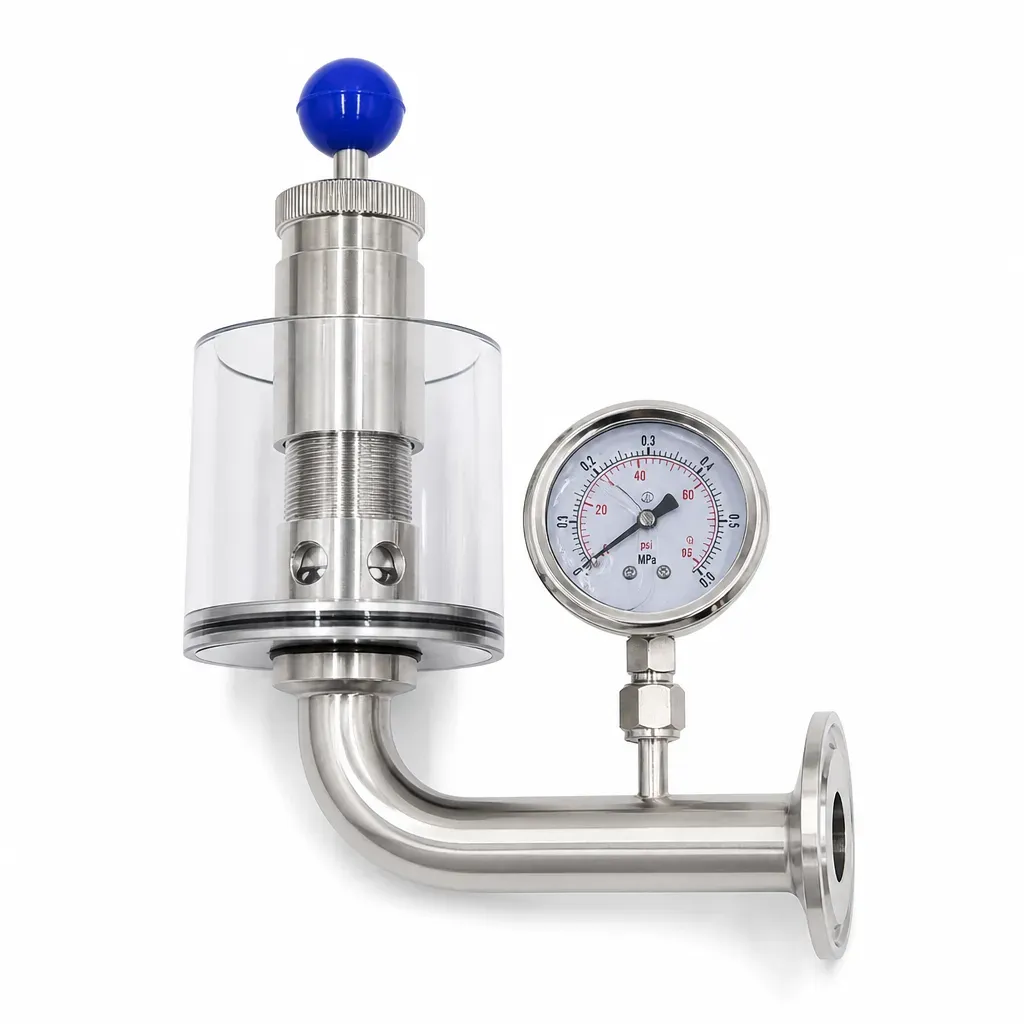
At GasPressur, the focus is practical rather than theoretical: adjustable pressure relief valve Tri Clamp spunding valve systems that deliver precise sanitary pressure control for fermentation, transfer and carbonation. Based on our testing across pressurised beverage setups, consistent valve response and clearly defined adjustment ranges make a meaningful difference to process stability and repeatability. For buyers in the UK, that combination matters because cleanability, repeatability and compatibility are often more important than simply choosing the cheapest valve on the shelf.
This guide explains what a 1.5 inch tri clamp valve is, where it fits, how to assess quality, and what to check before ordering for a British setup.
What is a 1.5 inch tri clamp valve?
The term 1.5 inch tri clamp valve refers to a valve designed to connect into a sanitary line using a 1.5 inch Tri-Clamp, sometimes called Tri-Clover, fitting. In other words, the measurement refers to the connection standard rather than a simple external pipe measurement in the way many first-time buyers expect.
A typical assembly includes:
- Two matching 1.5 inch ferrules
- A sanitary gasket seated between the ferrule faces
- A clamp securing the connection
- The valve body or pressure-control assembly fitted inline or onto a vessel port
This connection style is valued because it can be assembled and removed quickly without threaded contamination traps. As a result, in applications where hygiene and inspection matter, that is a major operational advantage.
Why is 1.5 inch Tri-Clamp such a common size?
In the UK market, 1.5 inch Tri-Clamp is one of the most widely used sanitary sizes for small to mid-scale process systems. It offers a practical balance: compact enough for smaller vessels and modular rigs, but large enough to support dependable flow and accessory compatibility. It is also a size commonly found across fermenters, brite tanks, transfer manifolds and CIP-capable assemblies supplied into British food and beverage operations.
What is the difference between a tri clamp valve and a threaded valve?
Threaded fittings still exist in many systems, but they are less attractive where sanitation and repeatable maintenance are priorities. Threads can harbour residue, take longer to clean properly and often require sealants or careful torque management. By contrast, a tri clamp valve is designed around smooth contact surfaces and straightforward inspection. Consequently, that matters in regulated and quality-sensitive environments.
What is a 1.5 inch tri clamp valve used for?
The 1.5 inch tri clamp valve is not a niche component. Instead, it appears across a range of British industries where clean process control matters.
- Breweries: controlling pressure during fermentation, conditioning and closed transfer
- Cider and soft drinks production: managing carbonation and vessel pressure
- Dairy processing: maintaining hygienic connections in product-contact systems
- Food manufacturing: supporting sanitary transfer or relief points
- Laboratories and pilot plants: using modular stainless process hardware for controlled trials
In brewing and beverage work especially, adjustable pressure relief is central to repeatability. The wrong set point can alter carbonation, retention of dissolved gas and transfer stability. Therefore, the right valve helps maintain a controlled environment without relying on improvised workarounds.
Why does pressure control matter in fermentation, transfer and carbonation?
Presnfluences more than vessel safety. It affects gas retention, foaming behaviour, transfer speed and the overall consistency of the end product. During fermentation, controlled back pressure can support a more stable process. During transfer, it helps reduce oxygen pick-up when used in closed systems. During carbonation, it supports finer control over target pressure conditions.
That is where a specialist adjustable pressure relief valve Tri Clamp spunding valve becomes useful. It allows operators to dial in the pressure they actually need rather than relying on fixed, inflexible relief hardware.
How do you choose the right 1.5 inch tri clamp valve in the UK?
Not all valves sold under the same headline description are equal. Before buying, UK users should assess five core points carefully.
1. What material grade should a sanitary tri clamp valve be?
For sanitary and food-contact use, 316 stainless steel is typically preferred because it offers strong corrosion resistance and a proven track record in hygienic processing environments. Lower-grade stainless can be acceptable in some non-critical uses; however, for demanding beverage and food applications, 316 is generally the more robust choice.
2. Which seal and gasket materials are best?
The seal material must match the process conditions. Common options include silicone, EPDM and FKM/Viton, each with different temperature and chemical resistance characteristics. Buyers should confirm compatibility with cleaning chemicals, temperature range and product contact requirements. A valve body may be high quality, but the wrong gasket material can still compromise performance.
3. What pressure range should you look for?
This is one of the most important buying criteria. A valve designed for fine pressure adjustment gives better operational control than a crude relief device with vague settings. The manufacturer should state the operating range clearly. If a listing does not provide a defined adjustment range or tested pressure limits, that is a warning sign.
4. Why does surface finish matter on a tri clamp valve?
Smooth, cleanable internal surfaces reduce residue build-up and make inspection easier. Crevice-prone geometry should be avoided where sanitation is important. According to UK food hygiene expectations and standard sanitary design practice, product-contact components should be easy to clean, inspect and maintain consistently.
5. Will it fit your existing tri clamp setup?
Even when the nominal size matches, buyers should still check the full assembly: ferrule standard, gasket type, clamp quality and the intended installation point. In addition, if the valve is being added to a pressure-managed fermentation or transfer setup, the wider system specification matters just as much as the valve itself.
Ready to try GasPressur?
Shop Now — £129.99