Stainless Steel Spunding Valve Explained: A UK Buyer's Guide
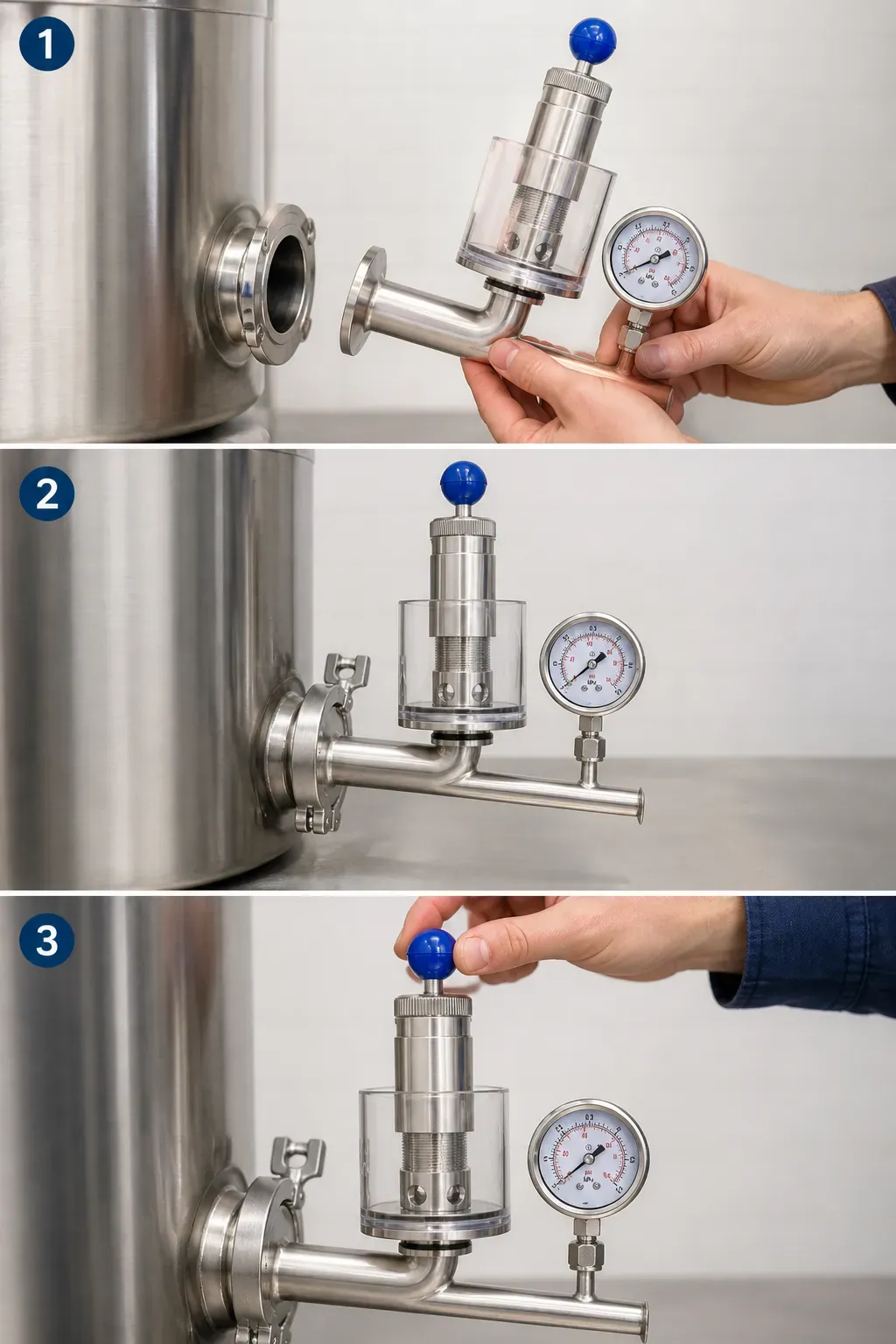
A stainless steel spunding valve sits at the point where pressure control stops being guesswork and becomes repeatable. For UK brewers, beverage producers and serious home fermentation setups, that matters. A poorly controlled vessel can lose carbonation, stress seals, create inconsistent results and, in the worst cases, become a safety issue. A well-built adjustable pressure relief valve with a sanitary tri clamp connection gives you controlled venting, cleaner process handling and a more dependable way to manage fermentation, transfer and carbonation.
At GasPressur, the focus is straightforward: precise sanitary pressure control for fermentation, transfer and carbonation. That is exactly where a stainless steel spunding valve earns its place. This guide explains what it is, how it works, why stainless construction matters, and what UK buyers should check before purchasing.
Key Takeaways
A stainless steel spunding valve is an adjustable pressure relief valve used to control vessel pressure during fermentation, transfer and carbonation.
For UK buyers, the strongest options combine stainless steel construction, sanitary tri clamp fittings, accurate adjustment, reliable seals and easy cleaning.
Pressure control is not only about product quality. The UK Health and Safety Executive states that pressure systems require suitable design, maintenance and safe operation under the Pressure Systems Safety Regulations 2000.
A tri clamp stainless steel spunding valve is typically the better choice where hygiene, durability and repeatability matter.
What Is a Stainless Steel Spunding Valve?
A stainless steel spunding valve is a pressure control device that allows gas to escape from a pressurised vessel once a set press reached. In practical terms, it helps maintain a chosen internal pressure during active fermentation or product transfer. Instead of venting unpredictably, the vessel releases excess gas in a controlled way.
The term is widely used in brewing and other carbonated beverage processes, but the core principle is simple: you set the pressure threshold, and the valve opens as needed to keep the system within that range. A stainless steel spunding valve is especially valued where sanitation, corrosion resistance and long service life are priorities.
For setups using tri clamp ferrules, the most practical format is an adjustable pressure relief valve tri clamp spunding valve. It connects cleanly into sanitary pipework, can be disassembled for cleaning, and is far better suited to hygienic processing than improvised fittings or mixed-material assemblies.
How a Stainless Steel Spunding Valve Works
Pressure rises inside the vessel
During fermentation, yeast produces carbon dioxide. During transfer and carbonation, gas pressure may also build intentionally. If that pressure has nowhere controlled to go, it can exceed your preferred operating range.
The valve is set to a target pressure
The adjustment mechanism applies force to the internal sealing assembly. Once vessel pressure remains below that set point, the valve stays closed. As soon as pressure exceeds the threshold, the valve begins to vent.
Excess gas is released gradually
A good stainless steel spunding valve does not behave like an all-or-nothing emergency blow-off. It is designed for controlled release around the chosen setting, helping maintain more stable vessel pressure.
The sanitary connection supports clean processing
Where the valve uses a tri clamp fitting, it integrates neatly into sanitary systems. That matters for cleaning, inspection and process consistency, particularly where the valve may see moisture, condensate, foam or product contact.
Why Stainless Steel Matters
Not all spunding valves are built to the same standard. Stainless steel offers practical advantages that directly affect performance, hygiene and lifespan.
Corrosion resistance
Fermentation environments are damp, cleaning cycles can be aggressive, and carbon dioxide-rich conditions are not friendly to low-grade metals. Stainless steel resists corrosion far better than plated or mixed-metal alternatives, especially when exposed to repeated washdowns and sanitising solutions.
Sanitary suitability
In beverage production, surface condition matters. Stainless steel is easier to clean thoroughly, less likely to harbour contamination in damaged coatings, and generally more appropriate for hygienic applications. If the valve sits anywhere near product contact zones or condensate pathways, sanitary design becomes more than a convenience.
Mechanical durability
A pressure control component is not the place to save money on weak materials. Stainless construction improves thread life, body strength and resistance to wear during repeated adjustment, disassembly and cleaning.
Better long-term value
Upfront cost is only one part of buying well. A stainless steel spunding valve usually repays the difference through longer service life, fewer replacement cycles and more dependable operation across batches.
Why UK Buyers Prefer a Tri Clamp Stainless Steel Spunding Valve
For many UK users, the strongest buying case is not simply stainless steel on its own, but stainless steel combined with a tri clamp sanitary connection. This matches the way serious fermentation and transfer systems are increasingly built.
Faster installation and removal
Tri clamp fittings are straightforward to assemble and break down. That reduces downtime when cleaning or swapping components in a process line.
Improved hygiene
Tri clamp systems are widely used because they are designed for cleanability. They minimise awkward internal geometries and make visual inspection easier.
Cleaner integration with sanitary hardware
If your vessel, tee piece or manifold already uses tri clamp ferrules, choosing a matching stainless steel spunding valve avoids unnecessary adaptors and leak points.
More professional process control
In practice, UK buyers moving beyond basic hobby arrangements often want sanitary pressure control that is easier to trust and easier to clean. An adjustable pressure relief valve tri clamp spunding valve fits that requirement well.
Where a Stainless Steel Spunding Valve Is Used
Fermentation pressure control
The most common application is maintaining a target pressure during fermentation. This can help reduce unwanted pressure swings and support more consistent conditioning behaviour, depending on the process and beverage style.
Closed transfer operations
During transfer between vessels, a stainless steel spunding valve can help manage receiving vessel pressure and prevent uncontrolled gas build-up.
Carbonation management
Where carbonation is being developed or maintained under pressure, controlled venting supports a more repeatable setup and helps protect connected equipment from excess pressure.
Sanitary beverage systems
Because stainless steel and tri clamp fittings suit hygienic process environments, these valves are also relevant in wider beverage handling where cleanliness and stable pressure are essential.
What to Look for When Buying a Stainless Steel Spunding Valve in the UK
UK buyers should assess more than headline pressure control. The better purchase is the one that suits your process, cleaning standard and connection format with minimal compromise.
1. Stainless steel body and wetted parts
Check what is actually stainless. Some products use stainless on visible outer parts only, while relying on lower-grade internal components. For sanitary process confidence, material consistency matters.
2. True tri clamp compatibility
Make sure the valve is intended for sanitary tri clamp integration rather than relying on improvised adaptors. A proper tri clamp design supports easier cleaning and a more secure fit within your existing hardware.
3. Adjustable and repeatable pressure control
The adjustment mechanism should be stable, understandable and capable of fine control. A valve that drifts, sticks or reacts inconsistently will undermine the whole point of installing it.
4. Seal quality
Gaskets and internal sealing elements are critical. Weak seals can cause leaks, poor pressure hold and cleaning problems. Buyers should check whether replacement seal components are available and whether the design supports easy maintenance.
5. Ease of cleaning
A stainless steel spunding valve used in fermentation or transfer should be easy to dismantle and inspect. Sanitary hardware that cannot be cleaned properly tends to create hidden process risk.
6. Supplier credibility
Buy from a supplier that clearly explains operating use, fitting type and maintenance expectations. In the UK market, responsive after-sales support and clear product documentation carry real weight, especially when the valve forms part of a pressurised system.
UK Safety and Compliance Considerations
A stainless steel spunding valve improves control, but it does not remove the need for safe system design. UK buyers should understand the distinction between routine pressure management and full system safety obligations.
Pressure systems must be suitable for service
The UK Health and Safety Executive provides guidance on pressure systems and the Pressure Systems Safety Regulations 2000. These regulations apply to relevant pressure equipment and place duties around design, maintenance and safe operation. A spunding valve is one component in that wider picture, not a substitute for proper engineering review.
Pressure-related incidents remain a serious risk
The HSE notes that pressure systems can store significant energy and may create serious danger if they fail. That is the practical reason many professional buyers favour robust stainless steel components and sanitary, dependable fittings. Source: UK Health and Safety Executive, guidance on pressure systems and PSSR 2000.
Hygiene matters in beverage environments
Where equipment is used in beverage production, cleaning discipline is part of risk control. Poorly maintained hardware can contribute to contamination issues, inconsistent product quality and avoidable operational faults. Sanitary stainless steel components support a cleaner, more auditable process.
UK HSE guidance makes clear that pressure systems can present serious danger if not properly designed, operated and maintained. For buyers, that reinforces the case for dependable stainless steel pressure control hardware rather than improvised assemblies.
Data Point: Why Build Quality and Cleanability Matter
According to the UK Food Standards Agency, cleaning and disinfection remain core controls in food and drink production environments, because poor cleaning can allow contamination risks to persist on equipment surfaces. While a stainless steel spunding valve is a specialist component, the same principle applies: equipment that is easier to clean and inspect is easier to manage safely and consistently. Source: Food Standards Agency guidance on cleaning and disinfection in food businesses.
For a buyer comparing materials, this supports the preference for stainless steel and sanitary tri clamp design. It is not merely a premium finish; it is a practical advantage in everyday process handling.
Common Buying Mistakes with a Stainless Steel Spunding Valve
Choosing on price alone
The cheapest valve often becomes expensive when it is difficult to clean, awkward to fit or unreliable under repeated use. Pressure control components should be judged on construction and process suitability, not just initial cost.
Ignoring fitting standard
UK buyers sometimes focus on the valve body and overlook connection compatibility. If your system is sanitary tri clamp, forcing in a non-matching format usually creates extra complexity with no real benefit.
Assuming all stainless valves are equal
Stainless steel is a broad description, not a complete quality guarantee. Surface finish, seal design, machining quality and internal geometry still matter.
Treating the valve as the entire safety system
A stainless steel spunding valve is for controlled pressure management. It must be used within an appropriately designed pressure setup, with suitable vessel ratings and safety considerations in place.
Why the GasPressur Approach Fits UK Buyers
GasPressur positions its product around a clear need: adjustable pressure relief with sanitary tri clamp integration. That aligns well with what informed UK buyers are actually seeking when they search for a stainless steel spunding valve.
The product narrative is practical rather than decorative: precise sanitary pressure control for fermentation, transfer and carbonation. For buyers who value clean installation, robust materials and straightforward process control, that is the right emphasis. It addresses the real reasons these valves are purchased in the first place.
From an operational standpoint, the combination of adjustability, stainless construction and tri clamp connectivity offers a credible solution for users who want tighter pressure management without sacrificing hygiene or serviceability.
How to Decide If This Is the Right Stainless Steel Spunding Valve for You
- Confirm your vessel and pipework use sanitary tri clamp connections.
- Check that you need adjustable pressure relief for fermentation, transfer or carbonation rather than a basic fixed venting setup.
- Prioritise stainless steel construction if cleaning, corrosion resistance and repeatable use matter to your operation.
- Review supplier information for maintenance, compatibility and intended operating use.
- Make sure the valve sits within a properly rated and safely managed pressure system.
If those points match your setup, a stainless steel spunding valve is likely to be a sensible upgrade rather than an optional extra.
Buy with Confidence from GasPressur
If you need an adjustable pressure relief valve tri clamp spunding valve built for precise sanitary pressure control, GasPressur offers a solution aligned with the realities of fermentation, transfer and carbonation. The value is in dependable adjustment, clean integration and stainless steel durability where it counts.
View the GasPressur product range and find the right stainless steel spunding valve for your setup.
Frequently Asked Questions
What does a stainless steel spunding valve do?
It controls presn a vessel by venting excess gas once a chosen pressure setting is reached. This helps maintain more stable conditions during fermentation, transfer and carbonation.
Why choose a tri clamp stainless steel spunding valve?
A tri clamp connection suits sanitary process systems. It is easier to install, remove, inspect and clean than many improvised threaded arrangements, making it a strong choice for hygienic beverage applications.
Is a stainless steel spunding valve better than a cheaper mixed-material version?
In most serious applications, yes. Stainless steel typically offers better corrosion resistance, durability and cleanability, which are all important in damp, pressurised and sanitation-sensitive environments.
Does a stainless steel spunding valve replace other pressure safety measures?
No. It is a pressure management component, not a substitute for proper vessel ratings, safe system design, maintenance and compliance with relevant UK pressure system requirements.
Ready to try GasPressur?
Shop Now — £129.99